
NOSEVAC holds annual meeting in Rome to advance mucosal vaccine research

The NOSEVAC consortium gathered in Rome for its annual meeting, which brings together researchers, immunologists, social scientists, and public health experts to review progress and chart the next steps in developing effective mucosal vaccines against respiratory diseases. The three-day event opened with a public session titled "Advancing mucosal vaccines: Science, strategy, and society", offering an interdisciplinary overview of the latest developments in the field. A public session titled convened leading experts to explore emerging scientific insights, translational strategies, and societal dimensions of next-generation vaccine development. The session brought together researchers, clinicians, and project partners to examine the role of mucosal immunity in addressing pathogens with pandemic potential.
Dr Anna Teresa Palamara, Director of the Department of Infectious diseases at Istituto Superiore di Sanità, welcomed the audience and in her online presentation stated that
"no single system can outpace a pandemic threat alone, only integrated international collaboration can achieve meaningful control."

Dr Ali M. Harandi the head of Science Strategy at European Vaccine Initiative opened proceedings with an introduction to the NOSEVAC project, setting the stage for a series of expert presentations. Keynote speaker Dr Rita Carsetti of Bambino Gesù Children's Hospital addressed the crosstalk between systemic and mucosal B-cell immunity in protecting the respiratory tract. Dr Eliana Coccia of the Istituto Superiore di Sanità explored innate immune responses in vaccinology, drawing on both ex vivo and in vitro approaches. Rounding out the public session, Dr Jocelyn Raude, NOSEVAC SEAC member from UMR ARENES / École des hautes études en santé publique, presented insights from health psychology research on tackling vaccine hesitancy.
The event featured a keynote presentation by Prof. Carsetti, who provided a detailed analysis of the contributing role of systemic memory B cells (MBCs) in mucosal protection. Drawing on data from COVID-19 infections and immunization studies, Prof. Carsetti highlighted the critical function of the spleen in orchestrating immune responses and facilitating the migration of immune cells to mucosal surfaces.
“Understanding how systemic immune compartments contribute to mucosal defense reshapes our vaccine design strategies,” Prof. Carsetti noted. “The spleen emerges as a central hub in coordinating protective immunity beyond traditional paradigms.”

These findings stimulated an extensive discussion among participants, particularly regarding the origin of immune cells populating mucosal surfaces and mechanisms to effectively mobilize them. Partners from the NOSEVAC consortium contributed perspectives from their ongoing research, enriching the dialogue with practical insights and interdisciplinary approaches.
Eliana Coccia, in her presentation, demonstrated the potential of ex vivo studies to identify blood-based signatures associated with different vaccine platforms. Her work emphasized how such signatures could guide the rational design and optimization of vaccines.
“Ex vivo profiling enables us to bridge systemic readouts with mucosal outcomes,”
she stated. “This approach offers a powerful tool for accelerating vaccine development and personalization.”
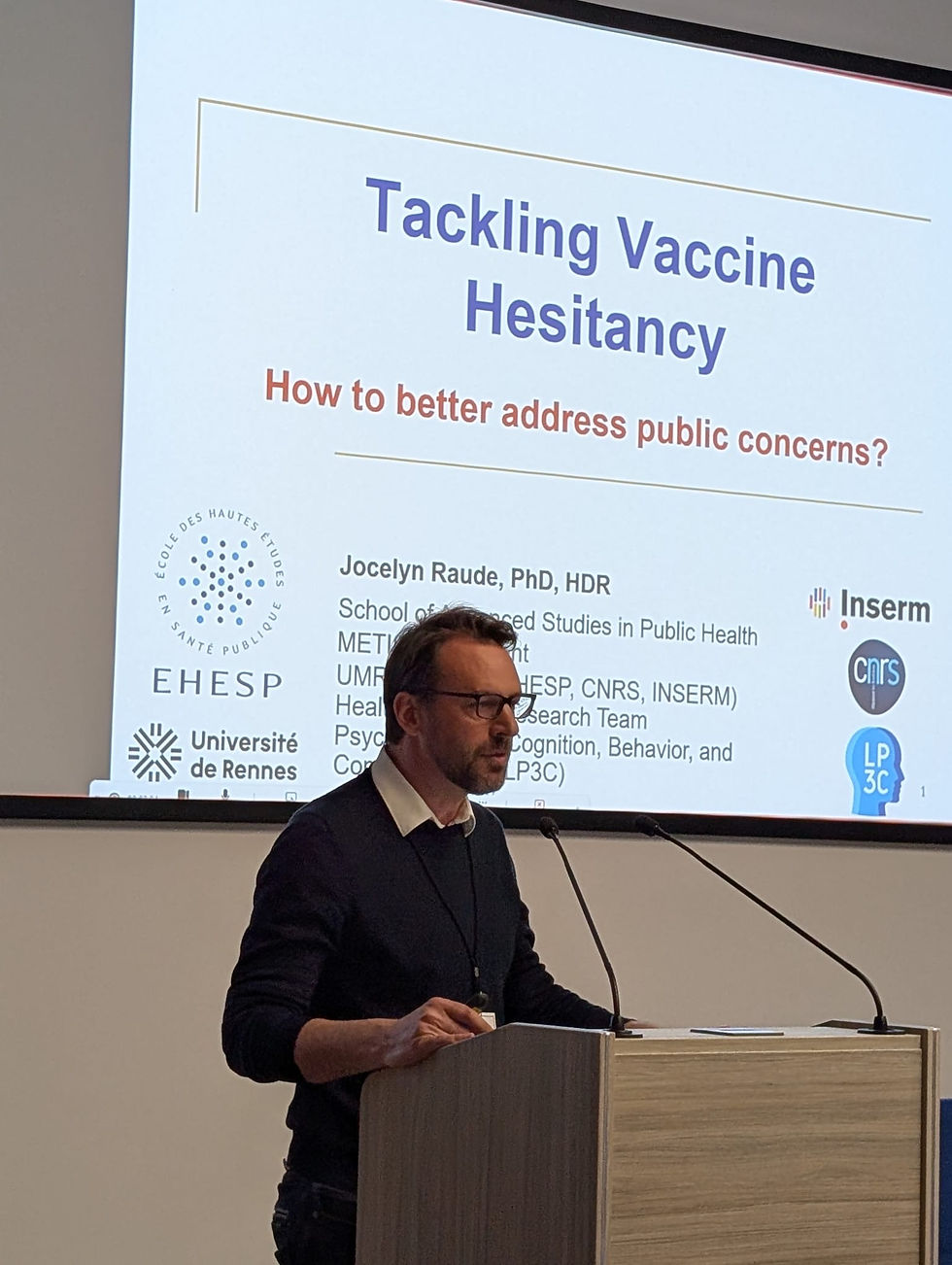
The session concluded with a lecture by Prof. Raude, who addressed vaccine hesitancy through a comparative analysis of public attitudes. His data revealed a significant increase in vaccine confidence between 2018 and 2022 in Poland, Ireland, and France. He further shared results from their studies on psychological determinants of vaccine acceptance and presented evidence-based interventions to improve uptake.
“Targeted communication strategies can substantially increase vaccination rates, particularly among older populations,” Prof. Raude explained. “Even brief interventions, such as a 15-minute consultation with a general practitioner, reinforced by clinic announcements and SMS reminders, can dramatically enhance compliance.”
However, he noted that such strategies are less effective in individuals who have never been vaccinated, underscoring the complexity of behavioral responses in public health contexts.
The session coordinator emphasized the importance of integrating scientific innovation with societal engagement:
“Advancing mucosal vaccines requires not only cutting-edge research but also a deep understanding of public perception and trust. This dialogue is essential for translating science into impact.”
In the wrap up session, the NOSEVAC coordinator Ali Harandi highlighted the collaborative nature of the event: “This session reflects our commitment to fostering international collaboration and knowledge exchange, which are indispensable in addressing global health challenges.”
The event underscored the necessity of interdisciplinary cooperation in advancing mucosal vaccine research, combining immunological insights with behavioral science to strengthen preparedness against future pandemics.
The annual meeting continued on with closed consortium sessions focused on scientific progress, project coordination, and future strategy. This project meeting marked a significant milestone, consolidating scientific progress and refining strategic priorities. The Scientific and Ethical Advisory Committee (SEAC), present at the meeting, expressed strong appreciation for the substantial advances achieved, particularly highlighting the effectiveness of the collaborative framework and the importance of increasing interconnectivity across work packages (WPs). “The level of integration across work packages is highly encouraging and reflects a mature and well-coordinated consortium effort,” noted a representative of the SEAC.
“This collaborative structure provides a solid foundation for impactful scientific outcomes.”
A key outcome of the meeting was the recognition of the extensive dataset generated across multiple WPs, often employing shared antigen formulations and experimental models. While this represents a major achievement, the consortium acknowledged also the need for the development of antigen- and formulation-specific data collation to enable robust comparative assessments, identify congruencies, and extract overarching scientific conclusions.
Consortium members engaged in detailed discussions on how to operationalize SEAC recommendations, including the implementation of harmonized analytical frameworks and data integration strategies. The importance of transitioning from data generation to data-driven decision-making was widely acknowledged.
The SEAC also provided strategic guidance on the optimization of immunization approaches within the project. This recommendation was well received and prompted constructive dialogue on refocusing experimental designs toward advancing mucosal vaccine performance, particularly in relation to real-world applicability and translational relevance.
The meeting concluded with a shared commitment to implement the SEAC recommendations, strengthen data integration, and accelerate the optimization of mucosal vaccination strategies. These efforts are expected to enhance the project’s contribution to next-generation vaccine development and pandemic preparedness. This third gathering reflects both the maturity the consortium has reached and the momentum it carries into the second half of the project. With a growing body of findings across immunology, vaccinology, and social science, NOSEVAC is well positioned to translate mid-project insights into concrete advances.
As respiratory diseases continue to pose a major global health challenge, the work reviewed and discussed in Rome this week reaffirms the importance of building immunity at the first line of defence: the mucosal surfaces of the respiratory tract. The outcomes of this meeting will play a pivotal role in guiding the consortium's research agenda toward its ultimate goal of delivering safer, more effective, and more broadly accepted mucosal vaccines for the benefit of public health.

This project has received funding from the European Union’s Horizon Europe research and innovation programme under grant agreement No 101080528. Funded by the European Union. Views and opinions expressed are however those of the author(s) only and do not necessarily reflect those of the European Union or the European Health and Digital Executive Agency. Neither the European Union nor the granting authority can be held responsible for them.


Comments